Saturday, November 21, 2015
Duterte for President
The news just broke. Davao City Mayor Rodrigo (Rody) Duterte has announced that he is running for President. People in the Philippines need speculate no more. Many of them are rejoicing. Duterte himself declared a month ago that he would not vie for the office. Whether that announcement was a strategic move or this announcement reflects a change of heart, the race just took a dramatic turn.

Sunday, October 4, 2015
Rody Duterte: Would He Be the Right Man for President of the Philippines?
In the months leading up to the election to determine the next President of the Philippines, some candidates are raising their profiles while others are losing their appeal among voters. At first glance Rodrigo (Rody) Duterte would seem not to be the right president for a country in which the human rights of citizens are violated more often than they are respected. The popular mayor of Davao City, and reluctant candidate for President of the Philippines, has built his reputation on a zero tolerance for crime and the people who commit it, no matter the circumstances. For years he has punished people who have broken laws with a vengeance resembling that of a sheriff exercising vigilante justice in a frontier town of the Wild West from American history.
However, Duterte, who has been courted by Bongbong Marcos, son of former dictator Ferdinand Marcos, to form a partnership to target the two highest offices in the land, President and Vice President of the Philippines, also has built his reputation on a compassion for the people. He has demonstrated not only an awareness of but also a commitment to address the plight of the Philippine masses, who have suffered for as long as anyone can remember at the hands of an elite composed of a few families. At least in other countries of Southeast Asia, such as Malaysia, the entrenched oligarchy has taken responsibility for delivering a respectable level of socioeconomic development to its people.
Duterte recognizes the vicious cycle of poverty in which the people of the Philippines find themselves trapped. The down-to-earth mayor of Davao City has pointed to the high rate of taxes which people are forced to pay but from which they see no benefits, such as in the form of improvements to basic infrastructure, as these monies instead are stolen by officials to enrich themselves and their families. If he were to become President of the Philippines, Duterte most likely would be the one leader who could enact legislation to bring real and meaningful change to citizens of the Philippines.
Duterte, say people, is a man of the people. And it is clear that the people of the Philippines want to vote for him. He just has to file the necessary documentation to become an official candidate. He has until the 16th of October to make his decision. No doubt the mayor of Davao City, the capital of Mindanao, the southernmost of the three principal geographical divisions of the Philippines, would carry his home turf in any election, at any time. But the charismatic leader has broad appeal. "If Duterte does not run, then I will not vote," said a taxi driver in Quezon City, part of the National Capital Region (NCR), which also includes Manila, located in Luzon, the northernmost of the three principal geographical divisions of the Philippines. While Duterte has the potential to translate his popularity among the masses across the Philippine archipelago into his most resounding victory of public office in May of 2016, he has the potential also to alter the status quo such that some members of society fear for the future.
However, Duterte, who has been courted by Bongbong Marcos, son of former dictator Ferdinand Marcos, to form a partnership to target the two highest offices in the land, President and Vice President of the Philippines, also has built his reputation on a compassion for the people. He has demonstrated not only an awareness of but also a commitment to address the plight of the Philippine masses, who have suffered for as long as anyone can remember at the hands of an elite composed of a few families. At least in other countries of Southeast Asia, such as Malaysia, the entrenched oligarchy has taken responsibility for delivering a respectable level of socioeconomic development to its people.
Duterte recognizes the vicious cycle of poverty in which the people of the Philippines find themselves trapped. The down-to-earth mayor of Davao City has pointed to the high rate of taxes which people are forced to pay but from which they see no benefits, such as in the form of improvements to basic infrastructure, as these monies instead are stolen by officials to enrich themselves and their families. If he were to become President of the Philippines, Duterte most likely would be the one leader who could enact legislation to bring real and meaningful change to citizens of the Philippines.
Duterte, say people, is a man of the people. And it is clear that the people of the Philippines want to vote for him. He just has to file the necessary documentation to become an official candidate. He has until the 16th of October to make his decision. No doubt the mayor of Davao City, the capital of Mindanao, the southernmost of the three principal geographical divisions of the Philippines, would carry his home turf in any election, at any time. But the charismatic leader has broad appeal. "If Duterte does not run, then I will not vote," said a taxi driver in Quezon City, part of the National Capital Region (NCR), which also includes Manila, located in Luzon, the northernmost of the three principal geographical divisions of the Philippines. While Duterte has the potential to translate his popularity among the masses across the Philippine archipelago into his most resounding victory of public office in May of 2016, he has the potential also to alter the status quo such that some members of society fear for the future.
Saturday, September 26, 2015
Geoff House in Tanay, Philippines: Shinto Farming in the Sierra Madre Mountains Outside Manila
Infrastructure is not the only necessity in the Philippines. Industry is necessary to foster socioeconomic development in a country known more for its poverty than its opportunity. But agriculture, specifically advances in agricultural production targeting emerging and rapidly growing markets for organic and all-natural products, also can transform lives. In the Philippines, farmers of both new crops, such as roselle, a form of hibiscus, and of more traditional agricultural products, such as coconuts, today are developing innovative enterprises in an effort to re-define long neglected regions into newly energized centers of economic activity.
 |
| Geoff, In Conference, With Tony De Castro and Jun Castillo, Opportunities for Socioeconomic Development, Coconut House, Quezon City, Philippines |
 |
| Tony De Castro, Surveying Crops, At His Farm, Tanay, Philippines |
 |
| Tony De Castro, Observing the Activities of Two Workers, Field of Roselle Plants Growing on Hillside, At His Farm, Tanay, Philippines |
 |
| Two Workers, Tending to Roselle Plants, Hillside Field, Farm of Tony De Castro, Tanay, Philippines |
 | ||
| Hillside Field, Roselle Plants, Farm of Tony De Catro, Tanay, Philippines |
 |
| Tony De Castro, Taking Tour of Fields, At His Farm, Tanay, Philippines |
 |
| Hillside, Row after Row of Roselle Plants, Farm of Tony De Castro, Tanay, Philippines |
 |
| Anticipating Bountiful Harvest of Roselle in November, Farm of Tony De Castro, Tanay, Philippines |
 |
| Four Workers, Finishing Work for the Day, Farm of Tony De Castro, Tanay, Philippines |
 |
| Completing Final Tasks of the Day, Farm of Tony De Castro, Tanay, Philippines |
 |
| On the Path Back to the Village, Farm of Tony De Castro, Tanay, Philippines |
 |
| Shinto Garden, At the Homestead, Farm of Tony De Castro, Tanay, Philippines |
 |
| Small Vegetable Garden, At the Homestead, Farm of Tony De Castro, Tanay, Philippines |
 |
| Small Fish Farm, Harvesting Tilapia for the Evening Meal, Farm of Tony De Castro, Tanay, Philippines |
Friday, September 25, 2015
Geoff House, Second Day in Ha Noi, Viet Nam

Man Passing By, Early Afternoon, Old Quarter, Hoan Kiem District, Ha Noi, Viet Nam

Waiting for the Bus, Early Evening, Old Quarter, Hoan Kiem District, Ha Noi, Viet Nam

Crossing the Street, Early Evening, Old Quarter, Hoan Kiem District, Ha Noi, Viet Nam

Woman Selling Treats next to Lake,
Early Evening, Old Quarter, Hoan Kiem District, Ha Noi, Viet Nam
Early Evening, Old Quarter, Hoan Kiem District, Ha Noi, Viet Nam

Lull in Traffic, Early Evening, Old Quarter, Hoan Kiem District, Ha Noi, Viet Nam

Exercising at the Lake, Early Evening, Old Quarter, Hoan Kiem District, Ha Noi, Viet Nam

Waiter, Preparing for Dinner Crowd, Old Quarter, Hoan Kiem District, Ha Noi, Viet Nam

Bride and Groom to Be, Posing for Pictures,
Early Evening, Old Quarter, Hoan Kiem District, Ha Noi, Viet Nam

Photo Session, Preparing for the Big Day,
Early Evening, Old Quarter, Hoan Kiem District, Ha Noi, Viet Nam
Wednesday, September 23, 2015
Geoff House, First Day in Ha Noi, Viet Nam
I arrived at Nội Bài International Airport in Ha Noi, the capital of Viet Nam, at about 9:00 in the morning on Wednesday the 23rd of September. The AirAsia flight from Kuala Lumpur to Viet Nam's capital city lasted almost 2 1/2 hours. I was eager to reach my hotel, called Meracus 1, in Ha Noi's Old Quarter, or Hoan Kiem District, as quickly as possible. Upon disembarking the airplane, passing through the gate, and emerging into the larger terminal, I immediately noticed some important details.
The Malaysian airport had been big and full of all kinds of pleasures for the passing travelers but not particularly appealing to the eye. The Philippine airports were uncomfortable at best and dysfunctional at worst. But Nội Bài International Airport possessed a certain style or appeal, perhaps attributable to the natural light present in the large, open space of the terminal, made possible by the high, wide panes of glass comprising the facade and sides of the building.
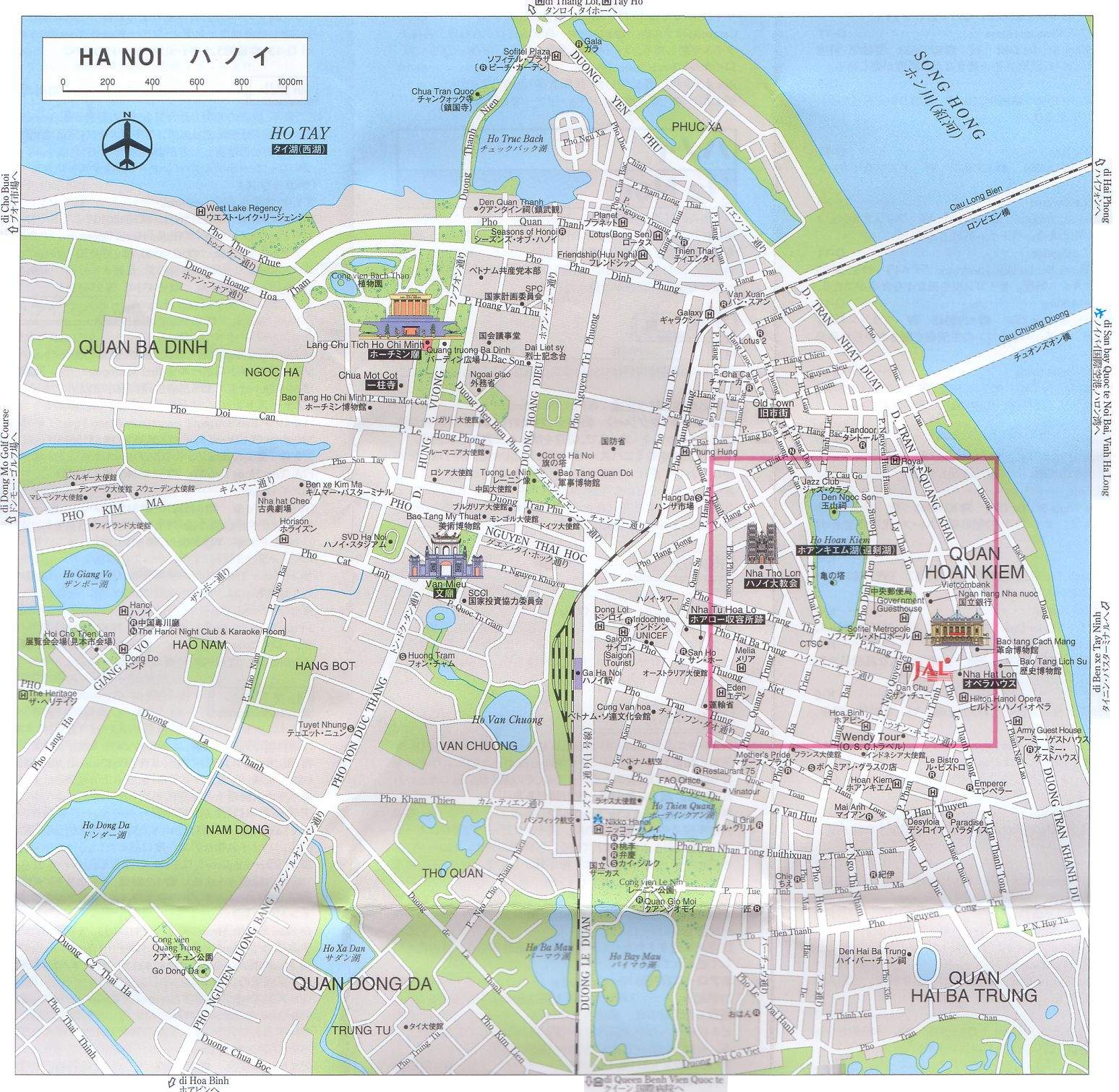
Ha Noi exhibits an openness toward outsiders which may be due in part to a shift in relations between Viet Nam's leaders and their American and European counterparts. Each side sees in the other a potential ally in efforts to check the geopolitical ambitions of China to the North. All sides recognize the economic benefits of liberalizing their markets. Profitable businesses can be established once the rules of the game are set. The emerging Trans-Pacific Partnership promises to establish a free trade agreement between Viet Nam and the United States, among other nations. In Ha Noi's Old Quarter, the intersection and mixing of influences, local and foreign, produce charming effects. The streets, buildings, and peoples are among the most interesting I have ever seen. Below you can see a map of the Old Quarter, followed by photos of various scenes across the city. At the bottom you can see photos which reflect life in Viet Nam of a very different nature.

Two Men, Sitting on Bench, Old Quarter, Hoan Kiem District, Ha Noi, Viet Nam

Family Outing, On the Motorbike, Old Quarter, Hoan Kiem District, Ha Noi, Viet Nam

View of Street, Below Madam Yen Restaurant,
Old Quarter, Hoan Kiem District, Ha Noi, Viet Nam

Looking down at the Street, Madam Yen Restaurant,
Old Quarter, Hoan Kiem District, Ha Noi, Viet Nam

Geoff, Sitting at Table, Waiting for Lunch,
Madam Yen Restaurant, Old Quarter, Hoan Kiem District, Ha Noi, Viet Nam

Lunch Is Served, Madam Yen Restaurant, Old Quarter, Hoan Kiem District, Ha Noi, Viet Nam

Geoff, Eating Lunch, Madam Yen Restaurant,
Old Quarter, Hoan Kiem District, Ha Noi, Viet Nam

Food on Table, Madam Yen Restaurant,
Old Quarter, Hoan Kiem District, Ha Noi, Viet Nam

Walking the Streets, Old Quarter, Hoan Kiem District, Ha Noi, Viet Nam

Tourists, Walking the Streets, Old Quarter, Hoan Kiem District, Ha Noi, Viet Nam

Rush Hour Traffic, Old Quarter, Hoan Kiem District, Ha Noi, Viet Nam

Rushing Home, Old Quarter, Hoan Kiem District, Ha Noi, Viet Nam

People on the Sidewalk, Eating Dinner,
Old Quarter, Hoan Kiem District, Ha Noi, Viet Nam
Old Quarter, Hoan Kiem District, Ha Noi, Viet Nam

Man on Motorbike, Beating the Traffic, Old Quarter, Hoan Kiem District, Ha Noi, Viet Nam

After the Storm, Old Quarter, Hoan Kiem District, Ha Noi, Viet Nam

Woman on Sidewalk, Selling Bananas,
Old Quarter, Hoan Kiem District, Ha Noi, Viet Nam


Geoff House in Kuala Lumpur, Malaysia, Night Scenes
Kuala Lumpur, the multi-ethnic capital of Malaysia, is a cosmopolitan city, the product, evidently, of massive infusions of foreign direct investment (FDI), from both East Asia and the West. Malaysia's current masters, the leaders of the United Malays National Organization (UMNO), have succeeded in selling their capital city as a safe haven for foreigners' money. Tall, futuristic buildings, including the twin, Petronas Towers, dominate the horizon of the city, and peoples of diverse ethnic backgrounds crowd its upscale shopping centers.
Perhaps the most noteworthy difference between the Philippine capital and the Malaysian capital is the relative abundance of businesspeople from Europe in the latter. Downtown Kuala Lumpur has the distinct feel of home for sizable communities of ex-patritots of countries such as England and the Netherlands. But perhaps it should come as no surprise. A colony of England until 1957 and a possession of the Netherlands previously, Malaysia today maintains its connections to its former, European masters. The legitimacy which governments from the West now bestow on UMNO leaders enables Malaysia's rulers to maintain their grip on power in a country in which their legitimacy is very much in question.

Petronas Towers, At Night, Kuala Lumpur City Center (KLCC), Kuala Lumpur, Malaysia

Diners, Restaurant, Airport, Kuala Lumpur, Malaysia

Lights at Night, Courtyard, Tune Hotel, Adjacent to Airport, Kuala Lumpur, Malaysia

Nighttime View, Fourth Floor, Tune Hotel, Adjacent to Airport, Kuala Lumpur, Malaysia

Lights On, Courtyard at Night, Tune Hotel, Adjacent to Airport, Kuala Lumpur, Malaysia

Two Hotel Workers, On Break, Night,
Outside Tune Hotel, Adjacent to Airport, Kuala Lumpur, Malaysia
Subscribe to:
Posts (Atom)